
Outliers
An innovator's friend

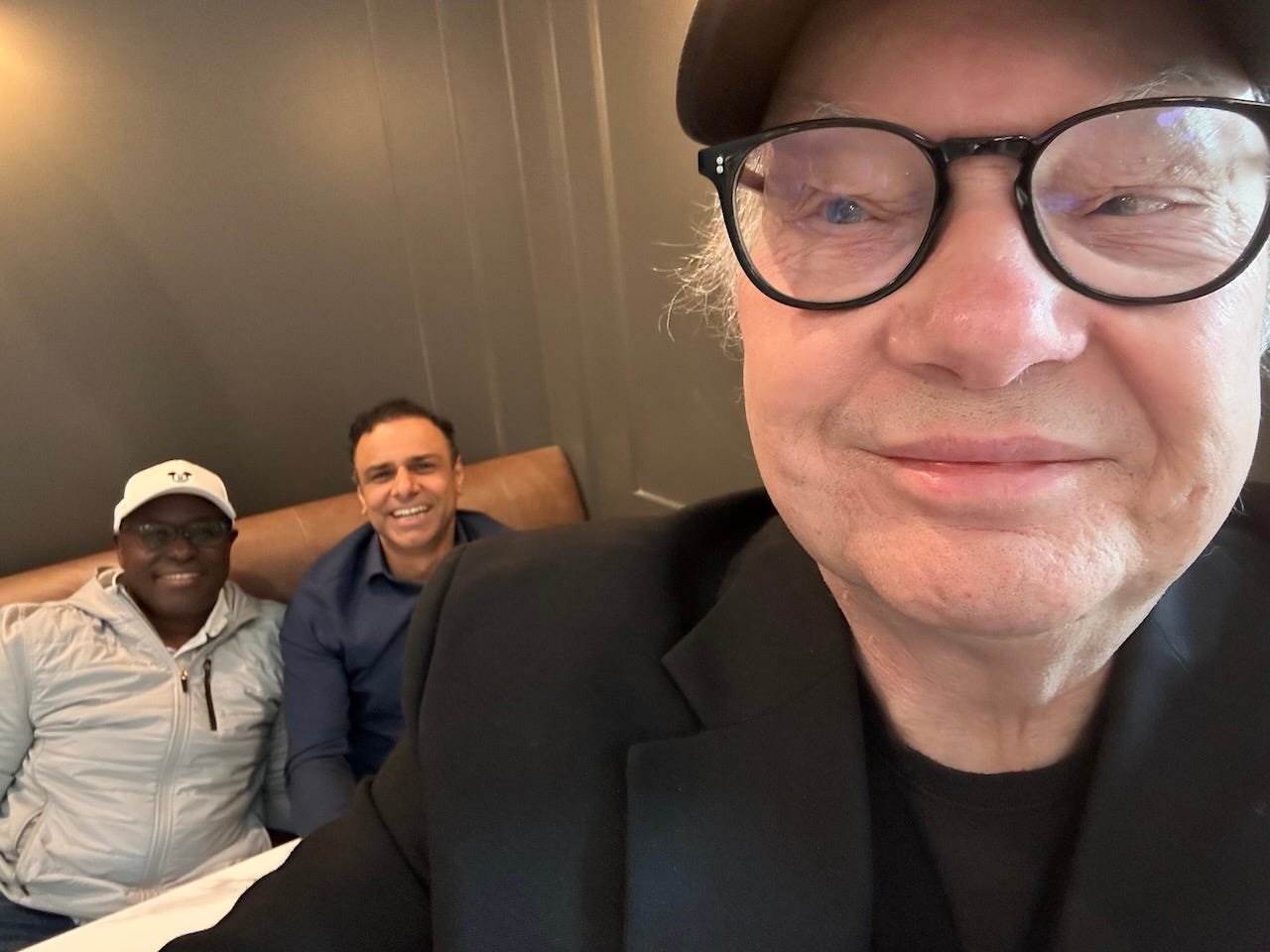
I had coffee Friday morning with Guieswende and Athar, two entrepreneurs developing new products related to instructional design and project management.
The conversation turned to qualitative customer research. Particularly, we started talking about pulling insights from a body of qualitiative survey results. What worked for Guieswende in a recent project was to prioritize design insights by the volume of individual comments that cited that particular idea. For him, that produced a clear indication of what was on customers’ minds and what they preferred. That is certainly a tried and true way to approach research insights. It worked for him!
But, I took a very different approach.
I love outliers!
I said that I love the lone comments that go against the grain, the outliers. the weird, the odd, things I haven’t ever heard before. I love the kind of comments that make me think about a product’s value in a new way.
My invention mentor used to pound on the fact that the best competitive innovation comes from understanding what customers value better than competitors. Ideally, that means knowing something that competitors don’t already know. Competitors know the same mainstream insights that everyone knows, what the status quo crowd agrees with. I want the advantage of knowing what outlier thinkers are thinking, and why they think that!
Give me the authentic, new takes on product value by the people who think differently.
The comments that make me say, “What? Wait! Why?
I can learn from them!
Perhaps the outliers find value in different ways than the mainstream users.
Sometimes an outlier’s take leads to a deeper understanding of the product’s core value. That may help me design a better set of features. It may also help me better articulate the product’s core value in marketing and sales material.
Sometimes it leads to a spinoff product. It opens a brand new door for us. And creates a product that confuses competitors because they don’t understand the value behind it. Sure, they’ll copy it, after it succeeds and become mainstream, but we’ll have the head start.
Perhaps the outliers use products in innovative, unexpected ways.
This typically occurs for one of three reasons.
We made a mistake. We made some bad design decisions, and that forced users to create workarounds. Thank goodness that we found out! Whew!
We discovered a new use case. Cool! Should it be a new feature of this product or a brand new spinoff product?
We discovered a use case outside of the market we were targeting. Cool! Maybe we can introduce this product to that new market and expand sales.
In any case, we get a win!
TL;DR Expected versus unexpected.
These are two separate approaches to qualitative customer research.
Find what customers expect - and provide it to them. Follow the numbers.
Find how and why customers use products in unexpected ways - and use that to suss out either a deeper understanding of existing product expectations or brand new expectations that haven’t surfaced yet in the mainstream.
But essentially, both approaches are centered on learning what customers value so that we can design the best product. I could make a case for using both approaches together, in a hybrid program.
I promote finding the unexpected because my fear is that if you overly cater to the mainstream majority user (the most common approach), eventually your sales will suffer as users or markets move in new directions. No, I am not adverse to making some money by selling a product loved by the mainstream majority. I just think that holding onto the status quo too long can be stifling. I’m sure that this has something to do with the fact that I am wired to love innovation, so I always want to find the leading edge of where value is headed - but it also just seems to make long tgerm financial sense to me.
Where do you fit?
p.s. go read about what these two entrepreneurs are building when they aren’t drinking coffee.
Guieswenda Rouamba - at LinkedIn
Athar Safdar - at LinkedIn
You are a true gem, Steve. Grateful to your mentorship and friendship. I treasure it.🙌💯👊